
Macon Resident Lookup Sources
No public roll proves where every Macon resident lives. The right starting point depends on the question. The Bibb assessor names the assessed owner and separates the parcel's situs address from the address used for tax mail. A deed records a transfer. A docket records a party's role. Georgia's voter self-service confirms only the voter's own information, never a stranger's address. Historical city directory volumes help with older names, though initials and outdated street forms can hide the person you want.
| Record | What It Confirms | Where to Search | Access |
|---|---|---|---|
| Assessor roll | Assessed owner, parcel, situs and mailing address | Bibb assessors | Free, current roll |
| Deed | Grantor, grantee, transfer and legal land description | Bibb Superior Court Clerk | Index and counter; copy terms vary |
| Court docket | Party role, case number, type, filing date and events | re:SearchGA | Search is public; account or payment may apply |
| Voter record | One's own status, precinct and polling details | Georgia My Voter Page | Identity-gated self-lookup |
| Vital record | Birth, death, marriage or divorce event | Georgia DPH or local custodian | Eligibility, ID and fees depend on record |
| License or entity filing | Credential status or filed business role | Georgia license verification | Free index |
Start from the record closest to the known event. An address sends you to the assessor or the deed index. A lawsuit points to its court and year. A death may surface in a plain-paper copy, an obituary, or a probate estate. Every hit marks a role at one point in time. It is not a full resident profile. That distinction keeps a Macon resident lookup honest.
Confirming Macon Namesakes
Common names cause most false matches. Compare a middle initial, a known address, an approximate age, a relative, or a dated event. Try spelling variants too. Deeds grow stronger when book-and-page references agree. Court results gain strength when the case number and party role match. Never merge records just because names look alike.
Two independent sources beat any single hit. An assessor mailing address may belong to an owner who lives elsewhere. A registered-agent address may belong to a law firm. A case address can be stale, can be counsel's office, or can simply mark where papers were served. When the stable details conflict, a Macon resident search should keep the doubt.
Note: A name match is only a lead, while a matching parcel, record number, role, and date make the identification far firmer.
Search Macon Court Parties
Bibb County points newer civil and criminal searches to re:SearchGA. The local transition came on June 22, 2023. Land records and historical material stay in Bibb eSearch. The two portals are not substitutes. Pick Bibb and the correct court, then search by party or case number, using date, case type, and status filters when the live provider offers them.
| Search task | How to use it | Why it matters |
|---|---|---|
| Court or jurisdiction | Select Bibb and the proper court | Similar case types sit in different courts |
| Party name | Try full name, initial, and spelling variants | Finds captions under alternate forms |
| Case number | Use it when known | Strongest way to return to one file |
| Date, type, status | Apply only available live filters | Narrows namesakes without inventing identity |
A result can carry a caption, court, case number, case type, status, filing dates, party roles, attorneys, and docket events, plus links to documents. Sealed material and some protected identifiers stay out of view. The Bibb State Court fee page sets the copy prices. Ordinary copies cost 25 cents per page. Certified copies run $2.50 plus 25 cents per page. Written prepaid requests and offsite retrieval follow separate terms.
The re:SearchGA search screen shows the court-and-party path plainly. It lets a visitor frame the request before asking for the actual file.
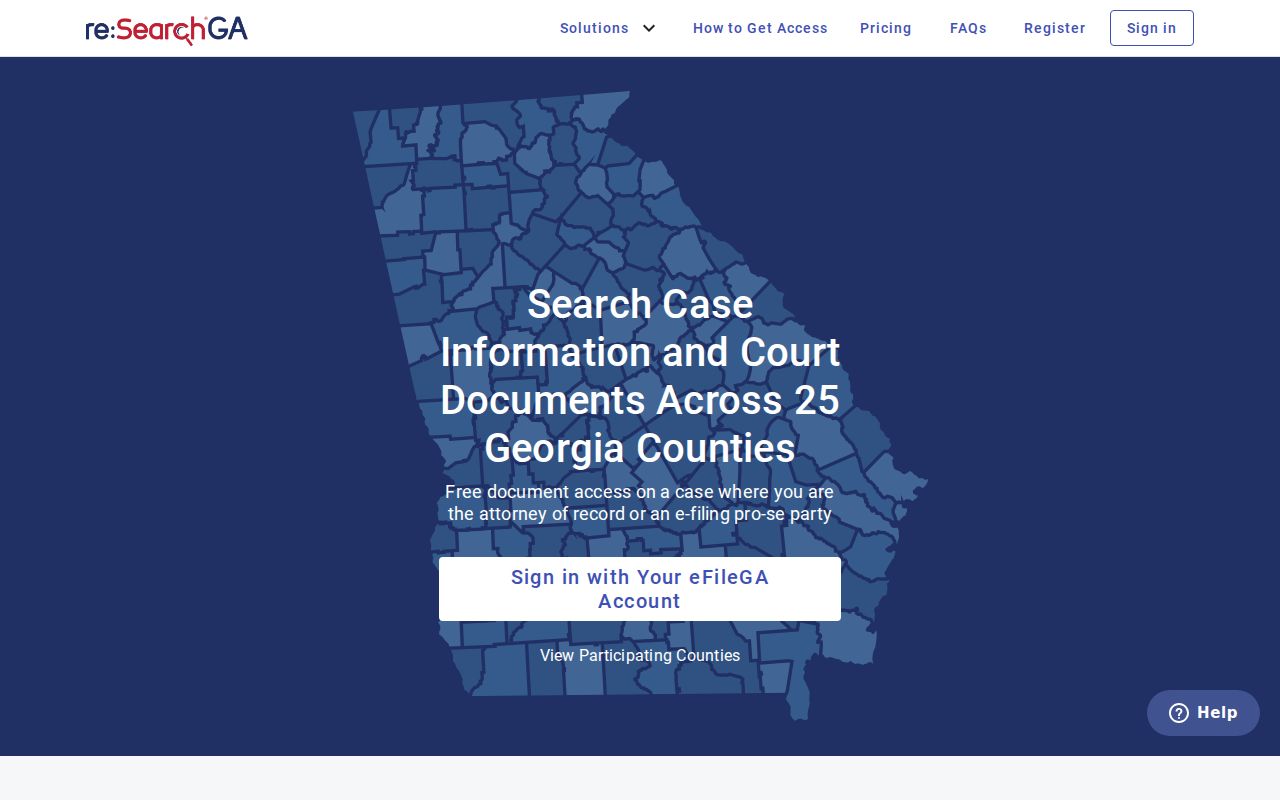
A portal hit only identifies a case record. The clerk's file supplies the actual document, the one that must be read and verified.
Verify Macon Resident Records
Build a narrow chain rather than a pile of name hits. The goal is one person, one address, and one dated event. Back it with records from distinct custodians. Ownership guides the search, never proves occupancy. Voter self-service stays private to the voter. Court and vital records keep their own access limits.
- Anchor the name to a known Macon parcel or dated deed. Keep the situs and owner mailing addresses separate.
- Search the correct Bibb court by name variants, then use a case number and party role to isolate the file.
- Compare a second dated source, such as probate, an entity filing, a license, or an allowed vital record.
- Ask the custodian for the actual document or a certified copy when proof, rather than an index lead, is required.
- Docket
- The dated list of filings, hearings, and orders in a court case.
- Index vs image
- An index points to a record and lists key fields. An image is the recorded document itself.
- Certified copy
- A copy authenticated by the custodian for formal use.
A clerk counter can tell you whether a file is onsite, offsite, archived, sealed, or absent from the web. Bring the full name, variants, an approximate year, and the case type. Add a case number if you have one. Court material follows court access rules. The judicial branch sits outside the Georgia Open Records Act.
Macon Vital Record Checks
A Macon residents directory index is one thing. A certified record is another. Birth and death certificates come from Georgia DPH and the Bibb County Health Department. Marriage licenses sit with Bibb Probate Court. Divorce files belong to Bibb Superior Court. State birth and death registration starts in January 1919. Macon kept records before that, though the early runs have gaps.
Georgia draws no single bright line for when birth and death records open. O.C.G.A. §31-10-25 governs disclosure. A birth certificate needs an eligible requester. A plain-paper death copy may be public with the Social Security number redacted. Certified copies follow family and tangible-interest rules. The first state copy costs $25, and added copies in one order cost $5 each. Ordering online or by mail can carry processing and shipping fees on top.
The official request route takes online, mail, and in-person orders. The local counter sits at 1600 Forsyth Street. Bring the full name, the event date and place, and parent names when they matter. Also bring proof of relationship, a government photo ID, a signature, and payment. For divorce, ask Superior Court for the final decree. A whole file comes loaded with personal detail nobody needs.
The Georgia registry source is one of the limited-purpose state indexes. It complements a Macon resident lookup.
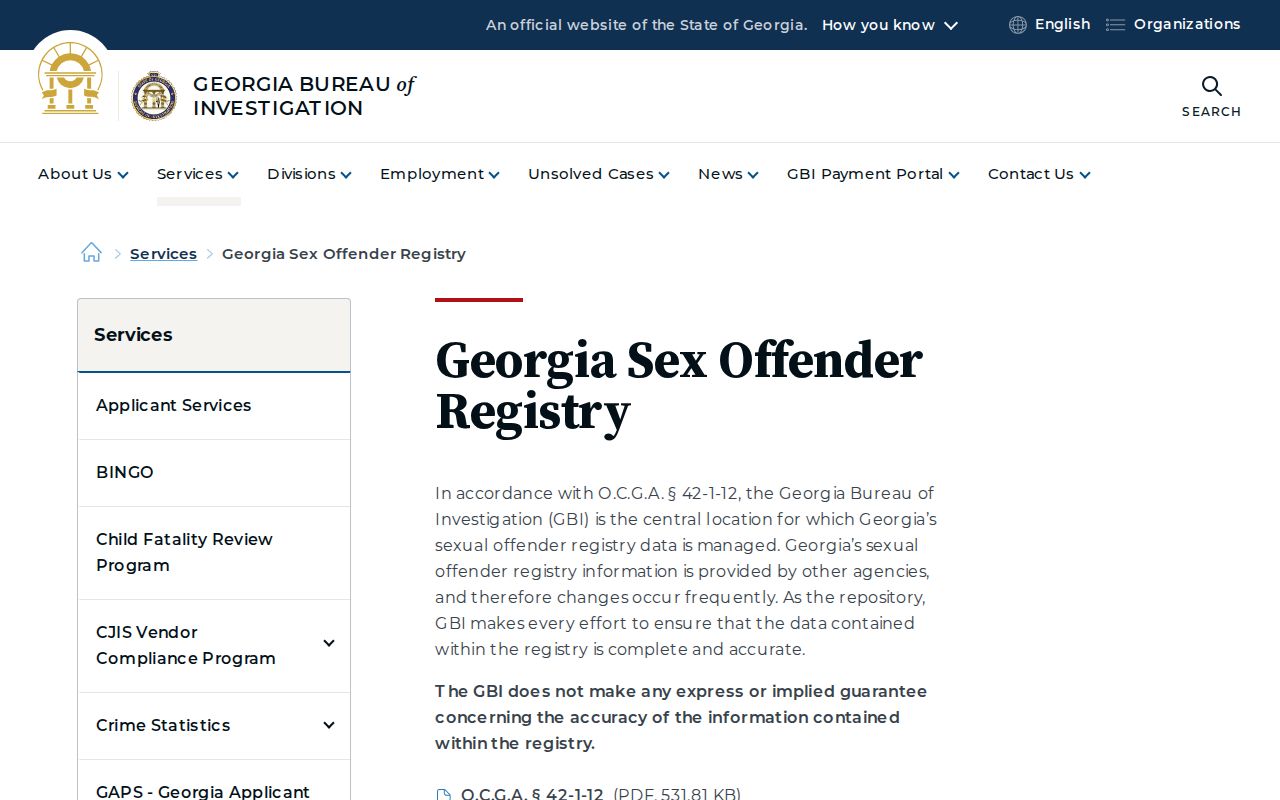
Read this official screen within its statutory scope. It is not a general address roll, and it replaces neither a court judgment nor an identity check.
Reconnect Through Macon Records
Different personal searches need different official paths. An heir should begin with a Bibb probate estate. Then inspect public petitions, notices, and orders subject to redaction. Compare those names against a death record, an obituary, or a deed. For a former classmate, school yearbooks, alumni groups, and public affiliations work best. The institution mediates any contact. Never treat an old address as a current one.
Adoption and birth-parent questions must follow Georgia's authorized reunion or registry process. Sealed files are not a puzzle to work around. Washington Memorial Library's Middle Georgia Archives helps with historical newspapers and family collections. No unified official obituary index exists. Treat family-submitted notices as leads, and check their dates and kinship against probate or vital records before relying on them.
Macon Names in Filed Roles
The Georgia business search takes a business name, control number, registered agent, officer, or designated agent. Its record proves a filed role, not a home address. The professional verification portal searches by profession and license type. It also accepts a first or middle name, last name, and license number. A wildcard can follow a partial term.
Here is an insider check. A registered-agent address may belong to a professional service firm. Match the control number, role, filing status, and dates. Do this before tying the filing to a Macon resident. Bibb trade names are filed with the Superior Court Clerk. They are not created in the state corporation search. When a local occupation-tax record does not appear in a name-search roster, make a defined request. That request should cover person, business, and date range.
The Georgia unclaimed-property source is listed below for a lawful personal search.
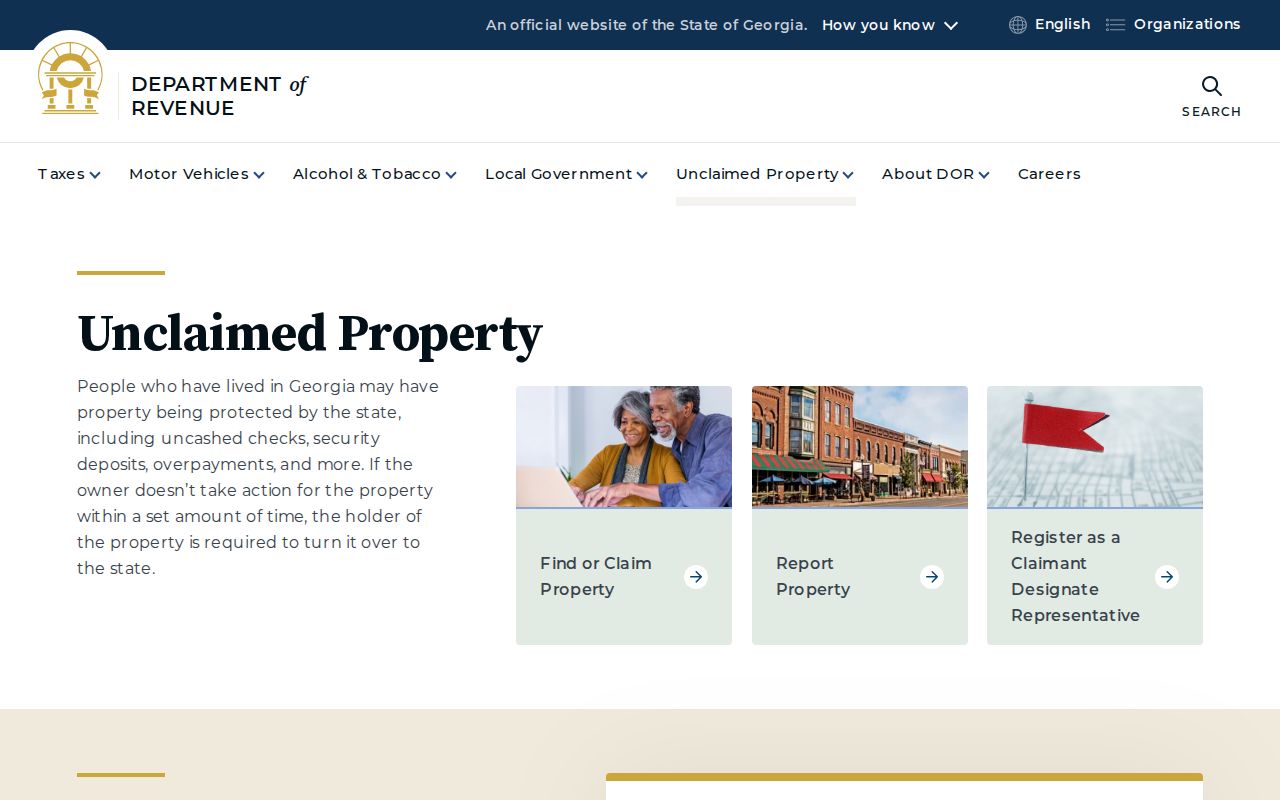
The state route is free to search. A claimant must still prove identity and entitlement before any property is released.
Macon Lookup Counter Fallbacks
When a portal stops short, contact the office that made the record. The Bibb Superior Court Clerk handles land records and Superior Court files. Its office sits at 601 Mulberry Street, Suite 216. Bibb Elections handles voter corrections. The assessor corrects parcel-roll errors, and DPH or the local health office issues vital certificates. A focused request should name the record and the date range. It should also include a known identifier and the disputed field.
For Macon-Bibb agency records, the county open-records portal routes requests to the right custodian. The Georgia Open Records Act, O.C.G.A. §§50-18-70 through 50-18-77, calls for a response within three business days. That deadline is subject to exemptions and reasonable search, redaction, and copy charges. The Act covers existing agency records, not a demand to create a new resident report. Court files follow court rules instead.
The Georgia offender query source is shown below. It is another bounded index. It is scoped to state corrections rather than all arrests or all Macon residents.
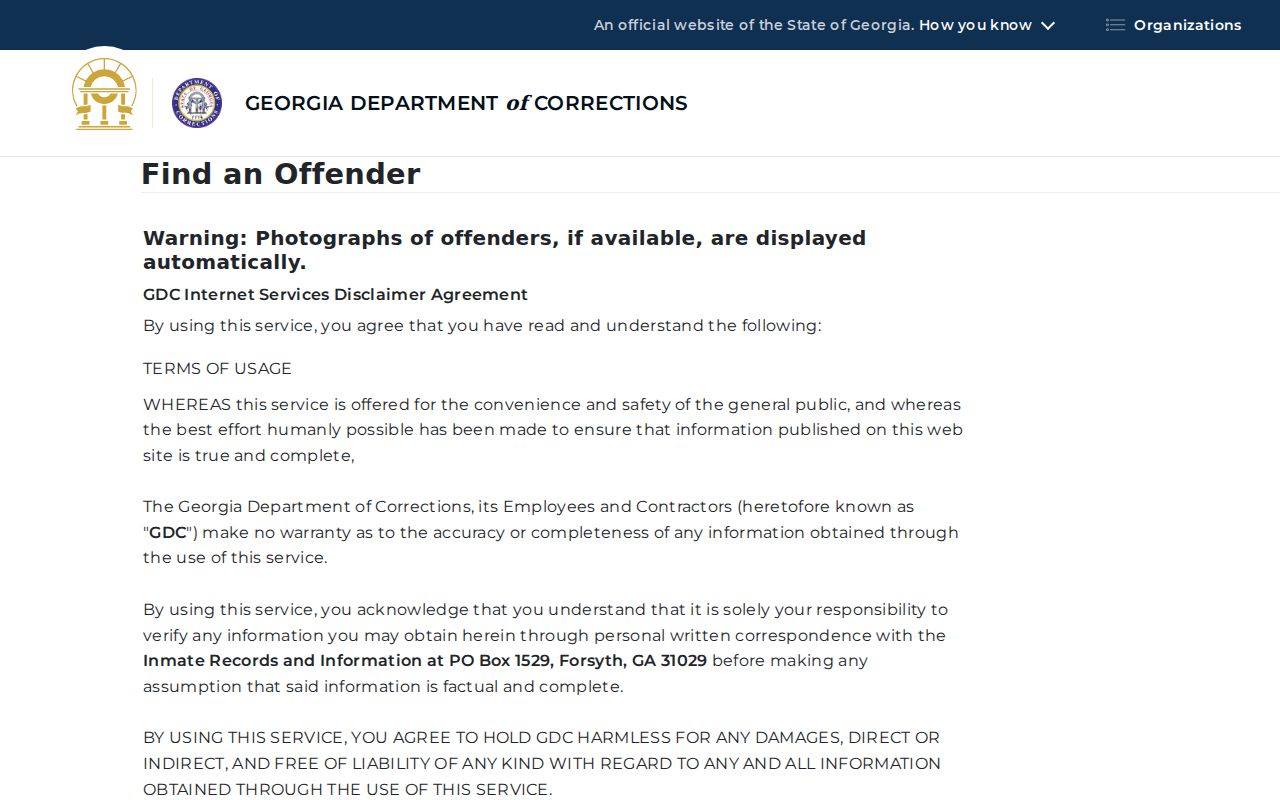
A result still requires careful name and identifier review. Georgia corrections advises written verification, and an exact criminal-history identity takes fingerprint comparison.
Protected Macon Resident Addresses
Some missing addresses are protected by design. VoteSafe can shield the voter-registration residence address of an eligible person. This applies to a person under a qualifying protective order or living in a family-violence shelter. It does not erase deeds, tax records, or old city directories. Georgia's broader Safe at Home substitute-address provisions carry a July 1, 2026 operational date subject to appropriations. So current enrollment operations should be verified.
Commercial directory deletion is narrower than many expect. A removal request to a republisher never deletes the government source. Georgia's Consumer Privacy Protection Act took effect July 1, 2026 for covered controllers. It grants access, correction, deletion, portability, and certain opt-out rights subject to thresholds and exemptions. Save confirmations and check the listing later. But never demand that a custodian erase a public deed merely because a copy appeared elsewhere.
Lawful Macon Resident Lookup
A lawful Macon resident lookup starts with restraint. Records being public does not grant permission to follow, threaten, or intimidate anyone. Georgia stalking law reaches surveillance, repeated contact, and other harassment carried out without consent. Some data stays closed on purpose. Voter applications and protected fields are sealed. Voter-list data furnished under Georgia law may not be sold or used commercially. Federal law restricts driver records as well.
Know when to stop, too. If the evidence in a record points to a different person, that is a signal to quit searching. Do not dig deeper. Disputes go to the custodian, along with the identifier and the exact field in question. Should a public image expose sensitive account or Social Security data, raise it with the Bibb Superior Court Clerk. Names, book-and-page references, party roles, and property descriptions normally remain part of the index.
Lawful use. A Macon resident lookup supports family history, heir research, reconnection, civic checks, and scam prevention. Never use a record to stalk, harass, threaten, or harm a person.